things to read: april
a tale of two flybys

Assuming our various wars haven't escalated, I will be on vacation when this post comes out. Here are a few things I've read recently.
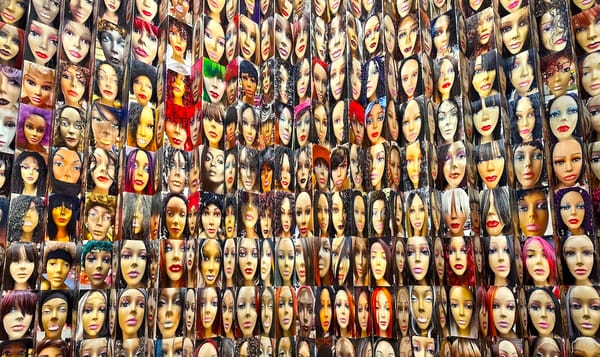
Catching Feelings, by Amanda Manitach
Cool article about the Georgetown Steam Plant and Marcellus Bonow-Manier, its artist in residence. I have fond memories from college wandering the ancient science building on campus. Each floor had a distinct smell, one from all the fruit flies we raised, and the labs had mercury traps in the sinks. I'm excited to see what the steam plant has in store for us.
As he makes his way through the plant, he clutches a compact Ricoh GR digital camera. Its screen is fully busted, he explains, so he can't see the picture in frame before shooting it, nor review the images until he uploads them. That's why it's his favorite. When something catches his attention-the traces of a note scribbled on the wall, a patch of paint peeling off steel, a bird's bones crumpled on a window sill-he shoots. Sometimes it's just a frisson in the air that coaxes him to take a picture, like a divining rod for 21st-century spirit photography. The results are, in his words, "some really weird, bizarre, crazy photos."
Sam Altman and Aaron Swartz Saw the Future, by David Moore
I've been long-reading this (different) article about Sam Altman in the New Yorker. I learned that Altman and civil rights activist / tech genius Aaron Swartz were in the same cohort. Swartz downloaded millions of files from JSTOR, facing 35 years in prison for doing so. Altman became a billionaire running a business that harvests orders of magnitude more copyrighted material. Seeing them together feels like one of those moments where two futures diverged. Doesn't feel like we got the good path, does it?
In November Sam Altman was briefly fired from OpenAI, in part for lying to the company’s board, before quickly returning in response to pressure from employees and investors. As the tech industry watched, agog, Altman completed his jettisoning of OpenAI’s much-touted commitment to safety in A.I. in favor of billions in investment.
Aaron Swartz was threatened with decades in jail for accessing (not disseminating) information; Sam Altman, whose company has accessed—and openly monetized—orders of magnitude more information than Swartz, has polluted and then regurgitated that information to the public, and gathered endless cash reserves from investors with which to fend off lawsuits challenging its commercial ambitions.
Swartz, the tenacious open-source programmer and champion of open access to publicly-funded research; Altman, who has increasingly closed off access to information about his A.I. model.
Swartz, who helped defeat the SOPA/PIPA internet censorship bills; Altman, whose company is bankrolled by Microsoft, which in 2011-2012 supported the restrictive “internet blacklist” bill, PIPA. Swartz, who drew attention to institutional corruption, who co-founded progressive advocacy groups that are still active on behalf of the open web; Altman, who has taken on the role of A.I. evangelist and counts the right-wing libertarian megadonor Peter Thiel among his mentors.
Mexistentialism, by Carlos Alberto Sánchez
Mexistentialism was a new concept to me before I read this essay. Sánchez distills the philosophy into three words: Nada es seguro. Nothing is certain. Objectivity is imperialism because it's impossible. Nobody has remove from the world around them.
Thinking of my father is one reason why I think it’s important to read Mexistentialism now, or to read it in times of crisis. When we do, not only are we gifted with vocabulary that can help us articulate our current crisis – words like accidentality, zozobra, nepantla and relajo – but it helps us understand how our crises and our philosophies are intimately tied to one another, how historical trauma shapes or informs our perspectives, and why our perspectives matter in the first place. After all, there is a reason why my father thinks that ‘nothing is certain’, and it has nothing to do with something he’s read or something someone’s told him. It has everything to do with the life he’s lived.
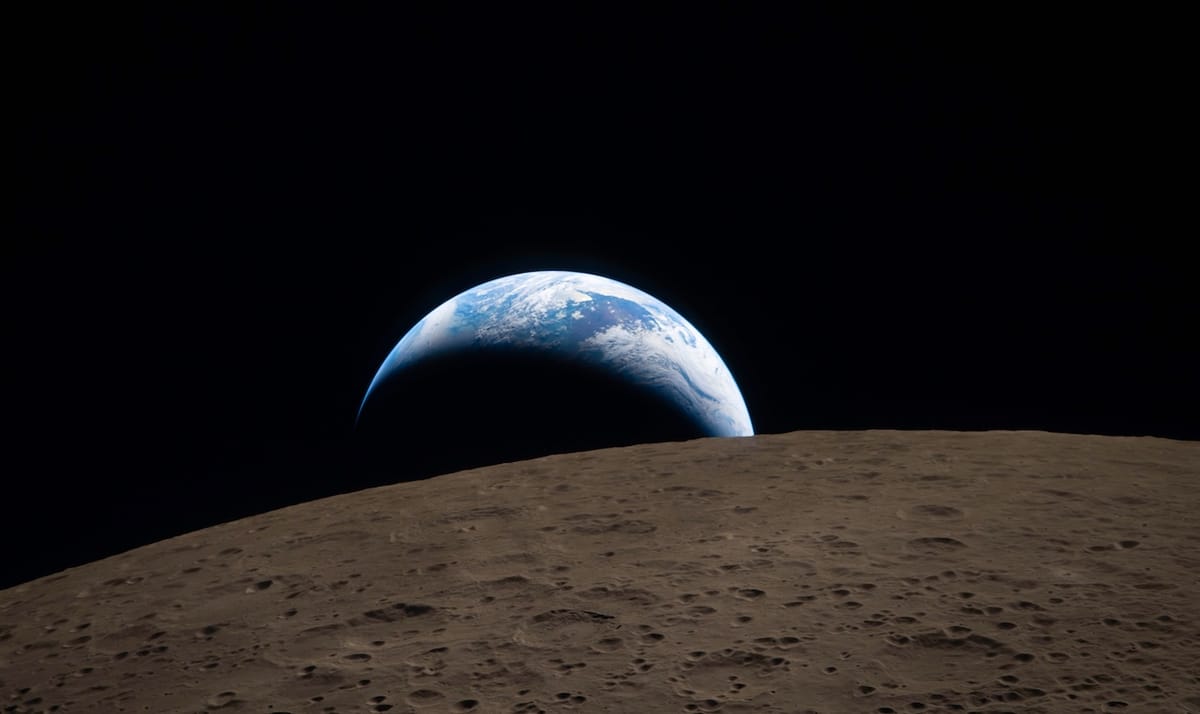
NASA’s Artemis II Crew Beams Official Moon Flyby Photos to Earth, by Jessica Taveau
I didn't think a moon flyby, not even a visit, would capture so many imaginations. It's been surreal to see the images coming back from the Artemis II crew this week. We're contemplating nuclear annihilation while witnessing how very small we all are. It feels like we're at another path diverging. I hope we choose the right one.
Our four Artemis II astronauts — Reid, Victor, Christina, and Jeremy — took humanity on an incredible journey around the Moon and brought back images so exquisite and brimming with science, they will inspire generations to come,” said Dr. Nicky Fox, associate administrator, Science Mission Directorate, NASA Headquarters in Washington.
See you next week!
Please tell your friends and colleagues to pick up a copy!
People in one or more of these groups can use the discount code POWER at checkout to buy this book for $1. People who want to change their board at an organization with an annual budget of less than $500,000 can now use code BOARD to buy this book for just $40.


 Except where otherwise noted, the essays on this site are licensed under a